Thursday, January 28, 2016

2016 Accord excites the senses, remains rock-solid

Mark Glover’s AutoGlo car reviews also can be seen on the Business page of The Sacramento Bee’s website – www.sacbee.com/news/business/article4005306.html

Sacramento, California ­– You don’t mess with a good thing, and Honda apparently knew this going in with the 2016 Honda Accord.

Honda messed with its venerable Accord for the current model year but did so in a good way.

A more angular, sculpted look is featured on the front end.  The rear bumper fascia is likewise more sharply sculpted.  New wheel designs also are part of the new package.

None of these things take away from the Accord’s long-standing strengths: practicality, affordability, dependability and a wealth of standard features, with plentiful versions still available in the $20,000s.

I’ve been in several 2016 versions of the Accord in the past few months, including the 2016 Sport sedan with “Honda Sensing.”  Honda is making a big deal about this suite of safety and driver-assistance technologies, and rightly so.

The package includes adaptive cruise control, a collision-mitigation braking system, a lane departure-warning system, a forward collision warning system, a lane-keeping assist system and road departure mitigation.  In addition, all 2016 Accords feature a standard, multi-angle rearview camera and an "expanded view driver’s mirror."

I’ll admit that some of these features sometimes can be quick on the draw and annoying, particularly the lane-monitoring systems, but I have to give it to Honda for offering up so many perks in the name of safety.

Honda seems to be covering all the bases, and given the various mistakes and distractions of driving these days, I would guess that any motorist driving a “Sensing” Honda is going to be bailed out of a crash at some point during the car’s lifetime.

Who can argue with that?

Even though I’m a grumpy advocate for driver control, I confess that the Honda Sensing features made me feel extra secure behind the wheel.  Dare I say it?:  The vehicle was likely going to correct any mistakes I made before I even knew I was making them.

Beyond all this, the midsize Accord remains the embodiment of trouble-free no-nonsense transportation.

Yes, there are gutsy engine options to be had, but the 2.4-liter four-banger rated at 189 horsepower does just fine, thank you very much.

Fuel mileage with that power plant is excellent at 26 miles per gallon in the city and 35 mpg on the highway.

The ride is smooth, and steering is responsive.  Rear seat roominess is pretty fair.

This being a Honda Accord, it’s expected to run forever and flawlessly, limiting your visits with mechanics to routine maintenance.

Does all this make the Accord popular in California and across the nation?  Do I really need to answer that?

Thursday, January 21, 2016

Turbocharged Sonata gets better with 2016 perks

Mark Glover’s AutoGlo car reviews also can be seen on the Business page of The Sacramento Bee’s website – www.sacbee.com/news/business/article4005306.html

Sacramento, California ­– Even in the land of the highly recommended, practically priced midsize sedan, a little performance must prevail.

And so it is with the willing 2016 Hyundai Sonata Limited 2.0T, a vehicle I last tested in 2014 trim.

Things have changed since then.

For 2016, Hyundai turned the engineers loose to make changes inside and out.  The changes include aluminum suspension components to make the ride more sporty, a conventional sunroof standard on all Limited models and freshly designed 18-inch alloy wheels.

On the outside, it works.  My tester looked ready to rumble at first glance.

On the move, it more than rumbled.

The tester’s turbocharged, four-cylinder engine was a growling, enthusiastic power plant maxing out at 245 horsepower.  That number of horses on a car this size will plant you firmly into your seat.

Not that I was complaining.

The tested Sonata was incredibly responsive, with no turbo lag attached.  It zipped into tight holes during busy freeway commutes and in heavy downtown traffic.  The jump-to-it response dished up a big dose of driver security.

And yet, fuel mileage comes in pretty nice at 21 miles per gallon in the city and 31 mpg on the open road.

This being a Sonata, you get a lengthy, generous list of standard comfort and convenience features.

On the tester, that included an 8-inch touchscreen on the navigation system, leather seating surfaces, an electronic parking brake, a hands-free smart trunk opener  and the previously mentioned tilt/slide sunroof.

The list of safety technology was likewise generous.  It included automatic emergency braking, a lane departure-warning system and a blind sport monitor/rear cross-traffic alert.

By the way, the 2016 Sonata gets top-tier federal government five-star safety ratings nearly across the board, the only exception being a still-strong four-star rating in rollover tests.

Not surprisingly, the generous load of goodies on the turbocharged tester bumped the starting price up to $34,075, compared with a bare-bones starter Sonata starting at 23,400.  To be honest, I’d splurge for the better-equipped Sonata as you’re still getting a deal at 34K and change.

I recommend the Sonata to a lot of folks looking for a no-nonsense, run-forever, midsize sedan, and none of the changes in the 2016 Sonata have changed my mind about that.

I give this current-generation Sonata a solid “A” grade.
 

Thursday, January 14, 2016

Mazda scores with new compact crossover vehicle

Mark Glover’s AutoGlo car reviews also can be seen on the Business page of The Sacramento Bee’s website – www.sacbee.com/news/business/article4005306.html

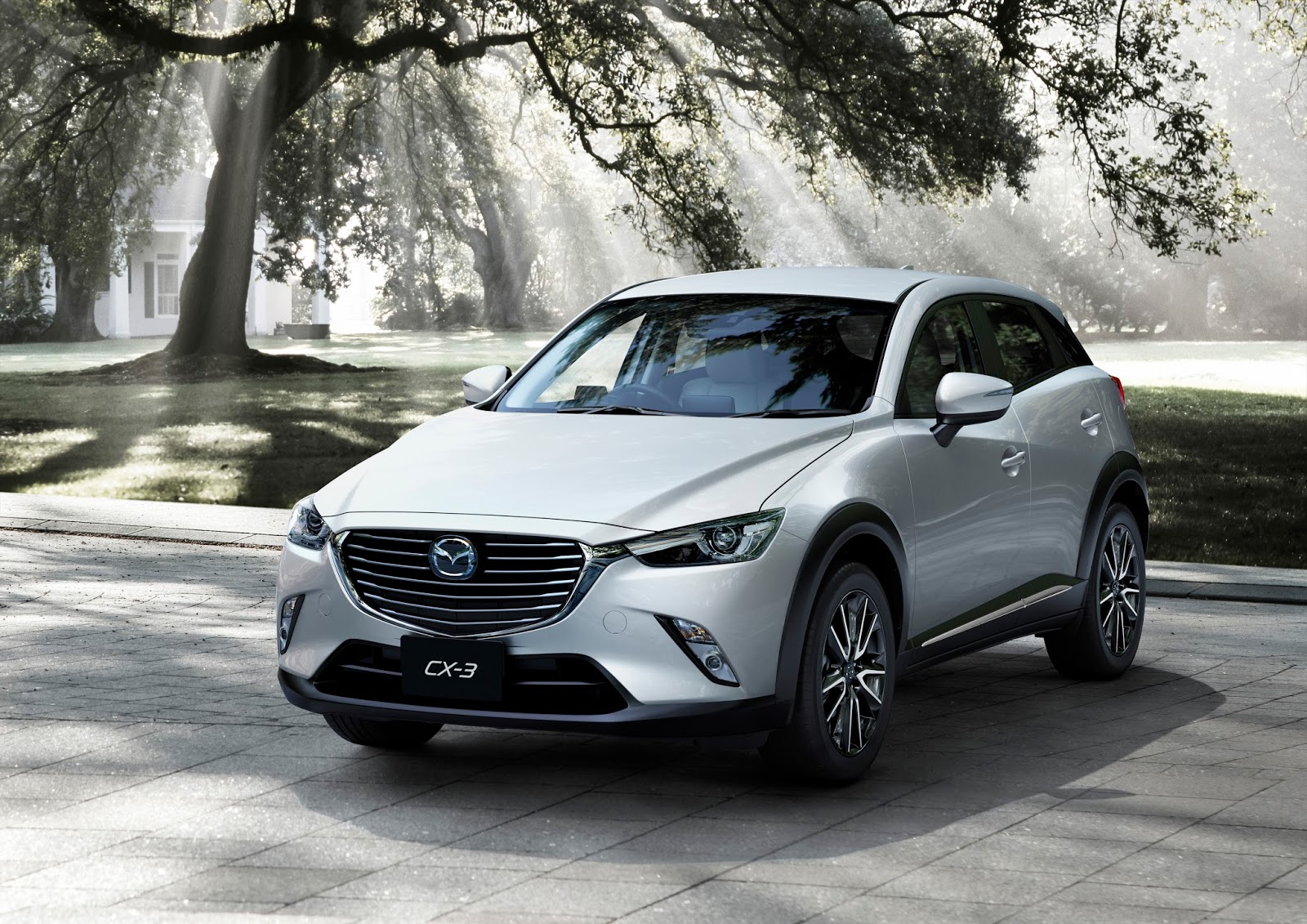
Sacramento, California ­– Mazda makes its play in the super-competitive small crossover segment with the all-new-for-2016 CX-3 sport-utility vehicle.

We had our first peek at the CX-3 at the 2014 Los Angeles Auto Show, and now that it’s here in numbers, I have to say it’s a noble first effort.  It’s packed with customer-pleasing standard features, gets exceptional gas mileage and is easy on the eyes.

My recent tester was the front-driving Grand Touring version dressed up in snappy-looking “Dynamic Blue Mica” exterior paint.  Naturally, it has a fairly imposing-looking grille, and the profile view is low-slung and sleek, with a long hood line.

Mazda has all sorts of words to describe its vehicles these days – SKYACTIV Technology, KODO and Soul of Motion design are high on the list.  But I think I can boil it down for you by saying that the tested CX-3 was equipped with numerous driving-enhancing, convenience-laden perks and was sculpted inside and out to make a large segment of motorists sigh with contentment.

The biggest surprise for me was stepping into the vehicle and seeing much more interior space than I anticipated when I was looking at the CX-3 from the outside.   I call this the TARDIS effect, and fans of the long-running “Doctor Who” television series will know what I’m talking about.

For the rest: Wow, there’s more room in here than I thought.

So, I happily loaded the tested CX-3 up with volunteer passengers and bulky cargo, just to see how much the vehicle could take on.  Amazingly, I had not a single verbal complaint from passengers or cargo.

The interior cabin included standard heated front seats, thoughtfully positioned control buttons on the steering wheel and leather surfaces.  Safety features ran the gamut, including a blind-spot monitor, and LED headlights gave me a long, comforting look at the road ahead.

One thing I did not understand was placing the center cupholder under the folding armrest.  If you have even a small Thermos-brand coffee holder, the arrangement presents a problem.

On the fly, the CX-3 was comfortable, responsive and smooth.  The four-cylinder engine rated at 146 horsepower is not a burner, so you have to pick your spots to be aggressive in freeway traffic.  And as of now, that’s the only engine available.

The other side of that coin is fuel mileage ratings of 29 miles per gallon in the city and 35 mpg on the highway.  Those numbers go a long way toward curing horsepower envy.

The starting price on this newcomer is a most-reasonable $24,990, although my ride was dressed up with a tech package that added almost $2,000 to the sticker’s bottom line.

Attention motorists in the market for a compact crossover: You have a new entry to add to your test drive list.
 

Thursday, January 7, 2016

Venerable Forester pleases on pavement, or off

Mark Glover’s AutoGlo car reviews also can be seen on the Business page of The Sacramento Bee’s website – www.sacbee.com/news/business/article4005306.html

Sacramento, California ­– I’m pretty sure that of all the motor vehicle models I’ve test driven over the past 15 years, I’ve logged more seat time in the Subaru Forester than all others.

I like the vehicle.

I’m not alone.  It was the first model to win Motor Trend magazine’s SUV of the Year award twice.

And yet, strangely, the Forester never shows up in a lot of conversations about sport-utility vehicles.  I suppose that’s because it’s not flashy enough, or pricey enough or whatever.

I’ll buy that, but you’ll be hard-pressed to find a genuine on-pavement/off-roader that’s more reliable, better equipped or more reasonably priced than the Forester.  That will win you a lot of converts among folks who are serious SUV devotees.

Take the recently tested 2016 Subaru Forester 2.5i Limited.  The starting price was $28,795, and even with a $2,100 option package with a navigation system and a primo harman/kardon audio system, the bottom line on the sticker was still a sane $31,790.

For this price, you get a lot.

Let’s start with 2.5-liter, four-cylinder, boxer-style engine rated at 170 horsepower and linked to Subaru’s matchless all-wheel drive system.  This is the perfect powertrain marriage.

While not a super-powered vehicle, the Forester moves with authority and purpose on paved streets and highway surfaces.  Off the road – something Forester drivers actually do with their SUVs – the Forester handles with remarkable sure-footedness.

Don’t take my word for it.  My comparatively modest off-road meanderings are walks in the park compared with those of other reviewers who take Foresters over rocks, streams and mountains.  Consistently, they come back from their off-pavement treks with smiles on their faces.

Keep in mind that this marks the fourth generation of the venerable Forester.  Over that time, Subaru has added a blizzard of driving-enhancement features and safety devices that add to the driving experience.

Key standard features in the tester included 17-inch all-season tires, a rear vision camera, a power panoramic moonroof, heated front seats/side mirrors and Subaru’s STARLINK infotainment system that offers equal portions of fun and security.

The exterior styling on the Forester is pretty SUV-basic, but that’s fine for a crossover that is not meant to be coddled.  The Forester is equipped to deal with searing summer heat, knee-high snow and relentlessly slippery surfaces.  It wants to be driven.

I might need to get back in one again real soon.
 

Wednesday, December 30, 2015

Big Chevy Tahoe is like a home on wheels

Mark Glover’s AutoGlo car reviews also can be seen on the Business page of The Sacramento Bee’s website – www.sacbee.com/news/business/article4005306.html

Sacramento, California ­– Standing 6-4, I still felt small walking up to the 2016 Chevrolet Tahoe 4WD LTZ sport-utility vehicle.

Everything about it was big.

Huge frame, massive 22-inch aluminum wheels, a cargo area the approximate size of a hotel lobby.  And a glimpse at the sticker smacked me down to the pavement.  It read $70,435.

Welcome to the world of big SUVs in America.  My tester wasn’t even dressed up that much.  The starting price was a still-hefty $64,610.

Needless to say, if you’re going to put down that kind of coin for a large SUV to do some serious chores over the long-term, you’d better be sure you’re getting the one you want.

On the tested Tahoe, that means a 5.3-liter V-8 engine with 355 horsepower.  This is worth the money, a brute motor that makes the big-shouldered Tahoe do just about anything a large sedan can do.

For all its bigness, the Tahoe actually handled smoothly on the highway and with surprising nimbleness on city streets.  When the engine is asked for a lot, a fair amount of noise makes its way into the cabin … but not as much as you might think.

Interior space is enormous, like looking out over Monument Valley in Arizona.  You’ll have no trouble transporting a big family and hundreds of pounds of their belongings.

The tester was filled with downright luxurious, passenger-spoiling perks.  A short list included perforated leather seats and with heating/cooling options, a heated steering wheel, a power tilt/telescoping steering column, a 10-speaker Bose surround-sound audio system and second-row power release bucket seats.

My impression of the Tahoe enthusiast is one who loves the comforts of home so much that he/she really wants to transfer those comforts into their primary motor vehicle.  If that’s what you want, the Tahoe delivers big-time.

I had a couple of gripes.

The front collision-warning system was quick on the draw, buzzing my seat during simple parking maneuvers.  Naturally, the first time this happened, I darn near launched myself out the top of the vehicle.

The power liftgate at the back surprised me the first couple of times I opened it by not yawning wide open to let my 6-4 frame comfortably fold underneath it.  A couple bumps on the head programmed me to be more careful.

Otherwise, as big SUVs go, this one is a solid B-plus, or maybe even an A-minus if you can easily adjust to some of its characteristics, big and small.

If you want to go big when you go home from the dealership, this Tahoe just might be your cup of tea.

Wednesday, December 16, 2015

Ending 2015 in style, with a milestone Mustang

Mark Glover’s AutoGlo reviews of the latest motor vehicle models also can be seen on The Sacramento Bee’s website at www.sacbee.com/news/business/article4005306.html

This review first appeared in the December 2015 edition of the Northern & Central California Cruisin’ News published out of Folsom, California – mg

Sacramento, California – Sometimes, you get to wrap up a year the right way.

For me, it was a week in a 2015 Ford Mustang Premium convertible, decked out in “Competition Orange” paint … an absolute head-turner at every stop. Photo by Charles Glover.

While we’ve moved on to the 2016 model year in earnest, I had been seeking the 2015 Mustang for some time.  Milestones are involved.

For Ford, the extensively reworked-for-2015 Mustang was a celebration of 50 years of the model.  For me, this was a shout-out to the first car I ever drove, a 1965 Mustang.  If you’re doing the math in your head and thinking that I’m 88 years old, let me enlighten you.

I was FAR short of the legal driving age when I drove the ’65 Mustang.  I was taken to a local school parking lot – where the nearest obstacle to collide with was perhaps a half mile away – and allowed to tour the thing around for a blissful half hour or so.

To this day, authorities in my native Ohio have not issued an indictment for this violation.  I assume the statue of limitations has run its course.

The tested 2015 Mustang was a fabulous mix of the old and new.  Happily, it looked like a Mustang at first glance, with the familiar pony car sculpting.  And in the tested droptop, the soft roof put on a great show disappearing into the boot at the push of a button.

The three-spoke steering wheel was a blast from the past, and the interior controls were laid out to make working them a snap.  Ebony, leather-trimmed seats were comfortable and sporty-looking.

My ride was a comparatively humble version with the 2.3-liter, four-cylinder engine.  Even so, the max horsepower rating was a robust 310, and the tester responded with enthusiasm when asked.  It was nimble on severe corners taken at high speed, although there was just the slightest give in the steering wheel when making slalom maneuvers.

The Mustang is known for high horsepower at a low price, although the tester started at a somewhat hefty $34,800.  It was dressed up with extras to push the bottom line on the sticker to a primo-level $41,295.

Despite 300-plus horses under the hood, fuel mileage ratings are pretty fair at 20 miles per gallon in the city and 30 mpg on the highway.

Extras on my ride included adaptive cruise control, reverse park assist and a voice-activated navigation system.  That’s all very nice, but in a Mustang, I kind of prefer the basics: horsepower and driving pleasure.

Thankfully, I had the chance to drop the top on some sunny, warm fall days and enjoy the full convertible experience.  This gave me a chance to appreciate spirited runs on the open road in the perfect vehicle for doing that.  I wanted to keep going, maybe to the East Coast and back, but my family would have missed me.

Was I remembering past runs in Mustangs of my youth doing this?  You bet your life.

In the end, I didn’t want to hand over the bright-orange dream machine, but you know how it goes.  Life goes on.  But hey, it’s good to hang on to those motoring memories from years ago.

A nice ending to a good year.
 

Thursday, December 10, 2015

This Escape happens in a hurry with turbo engine

Mark Glover’s AutoGlo car reviews also can be seen on the Business page of The Sacramento Bee’s website – www.sacbee.com/news/business/article4005306.html

Sacramento, California ­– I remember getting some seat time in the 2014 Ford Escape Titanium 4WD sport-utility vehicle, but for some reason, I don’t recall it being as enjoyable as my recent week in the 2016 version of the model.

That’s the tricky thing about evaluating automobiles.  Some models just evolve over time … or maybe the brains of auto reviewers get softer.

For obvious reasons, I’m going with the former.

The Escape is the essence of practicality.

Not oversized. Just right for a daily driver and road-trip runner, capable of carrying a fair load of cargo.

Not overpriced, starting a shade short of $32,000 on the tester.

Fuel mileage is pretty nice at 22 miles per gallon in the city and 29 mpg on the highway.

It looks spiffy head-on and in profile, wearing an eye-catching set of 18-inch, nickel-painted wheels.

This Escape was smooth and quiet in operation.  Passengers said they were comfortable, even with me at the wheel.

A generous package of standard interior cabin features included leather-trimmed seats, a leather-wrapped steering wheel, a nicely tuned Sony audio system (with 10 speakers, no less) and cool interior illumination.

Still, you can get all this in numerous SUVs on the market.  So, what impressed me so much this time around?

Maybe it was the 2-liter, four-cylinder, turbocharged, 240-horsepower engine that moved the tested Escape around like a scalded cat.

I swear, I don’t recall getting this kind of performance out of an Escape SUV.  But I wasn’t complaining.

Zipping into freeway traffic from the on-ramp was a sports car-like experience in the tester.  Significantly, a quick lift off the accelerator for a breather did little to knock the Escape off its stride.  If I wanted a second burst to change lanes at high speed, it was there.  Instantly.  No turbo lag here.

With right-now response resting under my right foot, I found myself putting the Escape through its paces in a much more aggressive way than I would other similar vehicles.  Simply put, the Escape showed all the willingness to make the moves, and I was enjoying myself.

The Escape was similarly robust in tight city traffic, darting in and out of harm’s way with a quick blip of the accelerator and a snap-turn on the steering wheel.

Kudos to Ford for installing this surprise pocket-rocket under the hood.  It has been some time since I had a serious heartbeat rush in an American-made sport-ute.